
Favorite Concrete Repair Products For Easy and Effective Fixes
Identify user-approved solutions that simplify the repair process while delivering professional-quality results.
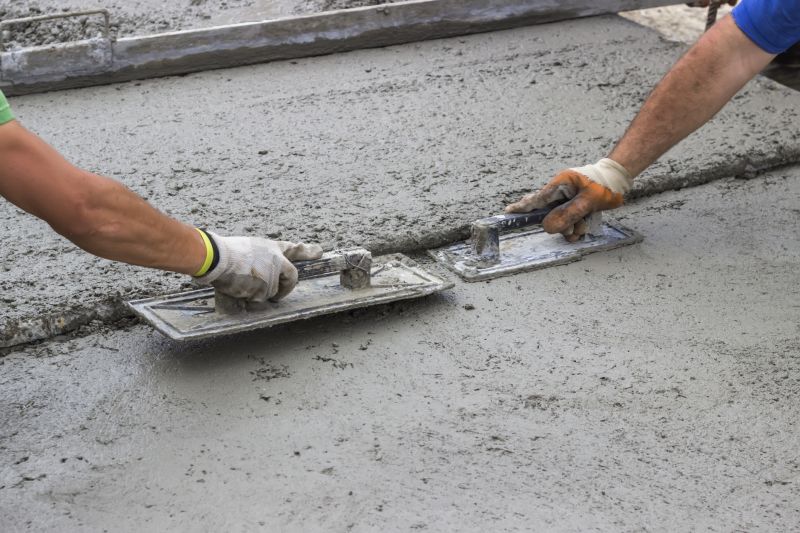 Concrete repairs are a common need for maintaining the integrity and appearance of various structures, from driveways and sidewalks to foundations and patios. Selecting the right products for concrete repair can help ensure durable and effective results. There are numerous options available, including patching compounds, sealants, fillers, and repair mortars, each designed to address specific types of damage such as cracks, spalling, or surface deterioration. Proper preparation and application are essential for achieving long-lasting repairs, and understanding the different product types can aid in making informed choices.
Top Overall Option
Concrete Repair Patch and Sealant
A versatile patch and sealant product designed for a wide range of concrete repairs, offering good adhesion, flexibility, and weather resistance. Suitable for cracks, holes, and surface imperfections, it provides a durable, long-lasting solution that can be easily applied with a trowel or caulking gun. Its compatibility with existing concrete surfaces makes it a practical choice for various repair scenarios.
Types of Products For Concrete Repairs
Concrete Crack Filler
A liquid or gel product designed to fill and seal cracks in concrete surfaces, preventing water infiltration and further damage.
Concrete Patch Compound
A ready-mix or pre-mixed compound used to repair larger holes and surface defects, providing a strong bond and smooth finish.
Hydraulic Cement
A fast-setting cement used for emergency repairs of cracks and holes, especially in load-bearing structures.
Epoxy Concrete Repair
A high-strength adhesive used to bond and fill cracks, often suitable for structural repairs requiring additional durability.
Polyurethane Sealant
Flexible sealant ideal for sealing expansion joints and cracks that experience movement.
Surface Restorer
Products designed to restore the appearance and surface integrity of worn or spalled concrete.
Concrete Resurfacer
A thin layer applied over existing concrete to improve surface texture and appearance.
Waterproofing Sealant
A coating that provides a protective barrier against water penetration and damage.
Fast-Setting Repair Mortar
A quick-setting mortar for repairing deep cracks and structural damage.
Self-Leveling Compound
A product used to create smooth, level surfaces over uneven concrete patches.
Concrete Stain and Colorant
Products that can be used to add color or stain to repaired areas for aesthetic integration.
Bonding Agent
A primer that improves adhesion between old and new concrete layers.
Concrete Cleaner
Specialized cleaners to prepare surfaces before applying repair products.
Expansion Joint Filler
Materials used to fill and seal expansion joints, accommodating movement and preventing damage.
Polymer Modified Repair Mix
A repair mix enhanced with polymers for added flexibility and adhesion.
Popular Choices
Widely used for sealing cracks to prevent water intrusion and further deterioration.
A popular choice for fast repairs of surface damage and holes.
Commonly used for structural crack repairs requiring strong bonding.
Often selected for emergency repairs and sealing active leaks.
Preferred for flexible sealing of joints and cracks that move.
Popular for restoring worn concrete surfaces with a smooth finish.
Used to update and repair large areas with a new surface layer.
Chosen for protecting foundations and underground structures.
Favored for quick structural repairs and deep cracks.
Commonly used to create level surfaces over uneven concrete.
Popular for aesthetic enhancements after repairs.
Frequently used to improve adhesion of repair materials.
Essential for preparing surfaces before applying repair products.
Widely used for sealing expansion and control joints.
Popular for its added flexibility and adhesion properties.
When considering concrete repair products, it is important to evaluate the nature and extent of the damage. For minor cracks or surface imperfections, liquid fillers or sealants may suffice, providing a quick and easy fix. More extensive damage, such as deep cracks or crumbling sections, may require patching compounds or repair mortars that can be mixed and applied to rebuild the surface. Additionally, some products offer enhanced adhesion, flexibility, or resistance to weathering, which can be beneficial depending on the repair location and conditions. Proper surface preparation, including cleaning and roughening the area, often plays a crucial role in the success of the repair.
Choosing the right product also involves considering the curing time, ease of application, and compatibility with existing concrete. Some products are formulated for indoor use, while others are designed to withstand outdoor elements. It is also helpful to look for products that can be painted over or finished to match the surrounding surface, ensuring the repair blends seamlessly. By understanding the different product options and their specific features, homeowners and professionals can select solutions that best meet their repair needs and ensure long-term durability.
Key Buying Considerations
- Identify the type and extent of concrete damage to select appropriate repair products.
- Consider whether the repair is for indoor or outdoor use to choose suitable formulations.
- Evaluate the curing time required for the product to ensure timely completion of repairs.
- Check compatibility with existing concrete surfaces, especially if painting or finishing is desired.
- Assess the flexibility of the product to accommodate structural movement or temperature changes.
- Determine if the product offers resistance to water, chemicals, or weathering based on the repair location.
- Review application methods to ensure they match your skill level and available tools.
- Consider the appearance after repair, especially if aesthetic blending is important.
- Look for products with good adhesion properties to ensure long-lasting repairs.
- Evaluate the durability and lifespan of the product to match the repair's expected longevity.
- Check for ease of surface preparation and cleanup to streamline the repair process.
- Review safety instructions and handling requirements for the selected products.
- Consider cost-effectiveness and whether multiple products are needed for comprehensive repairs.
- Verify if the product can be painted or finished over if needed for aesthetic reasons.
- Assess storage and shelf life, especially if repairs are planned for future use.